Data, not code
The domain decides and the presentation only shows: logic in small C++ models, every number in a CSV table, Blueprints and UMG only to display. Tuning the game never meant recompiling it.
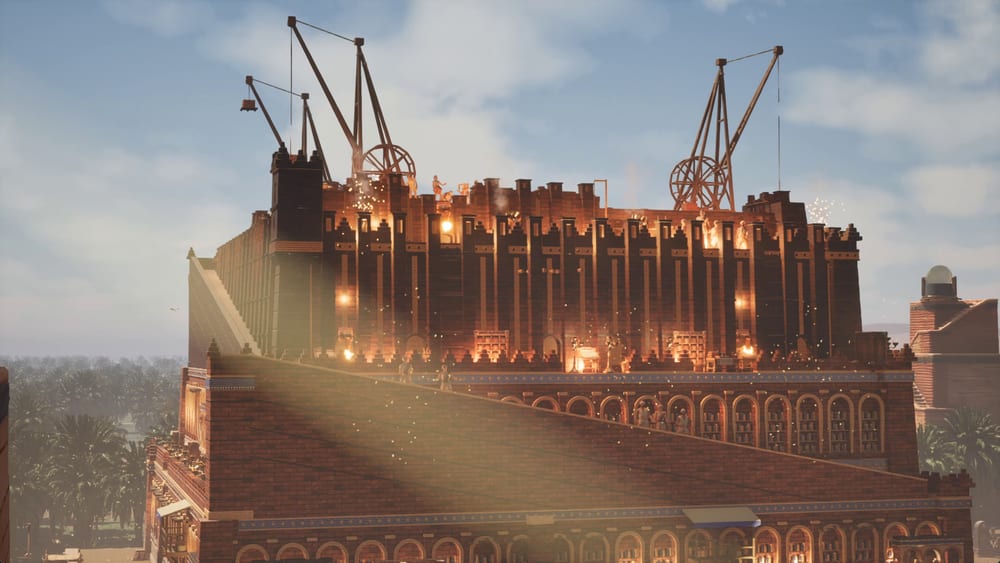
A god game where your only tool is one beam of sunlight. Built from zero in four days in Unreal Engine 5.8, by one person and one AI agent, for the theme Director's Cut. This is how it was made.
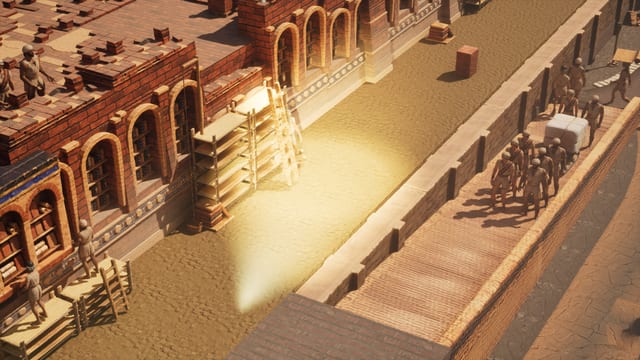
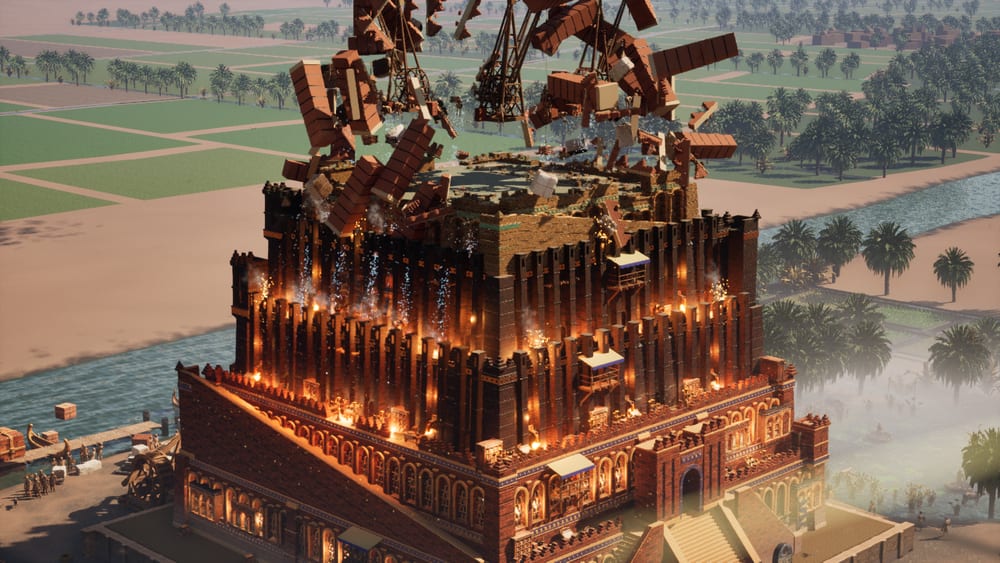
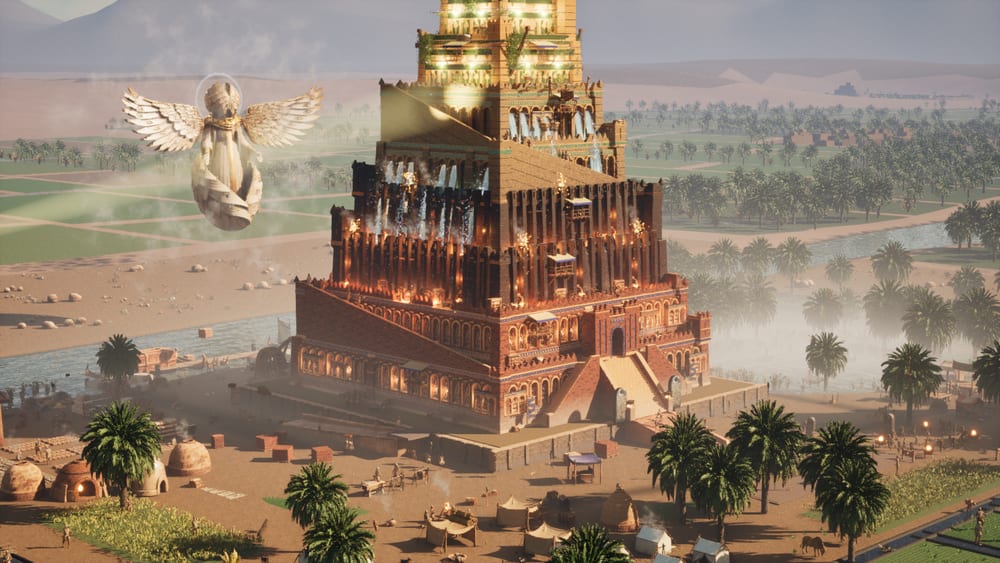
A nameless Patron wants a tower that reaches heaven in seven days. You are his seventh Architect, and you never lift a brick. You aim a great bronze mirror. Where the beam falls, crews build fast and tire. Where it does not, people rest, eat, fish and trade. The sun moves, the tower grows, and its shadow falls on the people raising it.
One beam, many needs, and a sun that moves. Your attention is the only resource in the game.
It is a prequel set in the world of Babel Destiny, the soulslike I am building in Godot. Only the lore crossed over: every system, mesh, sound and line in this game was made in Unreal Engine during the four days of the jam.
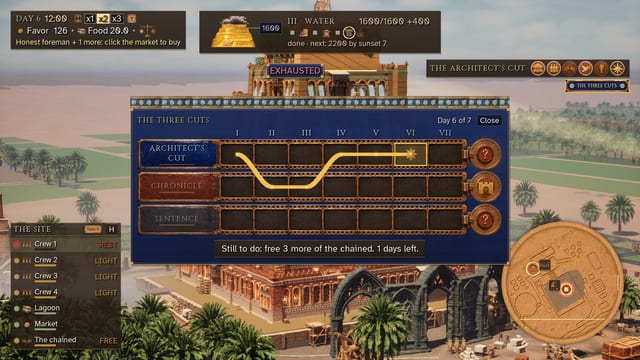
"Director's Cut" became two mechanics. First, you direct: the whole loop is deciding where the director looks, and a director cam follows the light and cuts to the key moments. Second, a director's cut is another version of the same story: the seven days end in one of three cuts of the same events, The Chronicle (the version history kept), The Architect's Cut (the director's own) and The Sentence. Every dusk, THE THREE CUTS film strip shows which version your run is heading for.
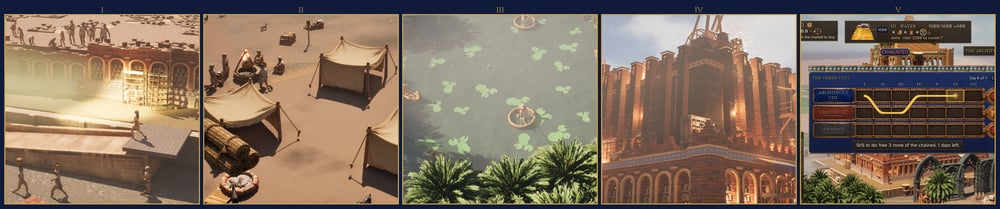
Team DelPortalDream is two: me, directing (design, decisions, art direction, every playtest and every "no, again"), and Claude Code (Anthropic) as the AI agent that wrote the C++ and the Python, built the data tables and drove the Unreal editor through the official Unreal MCP plugin. At the peak, nineteen Claude Code terminals worked in parallel, each with its own territory on a shared task board, while one of them integrated and tested everything in the editor.
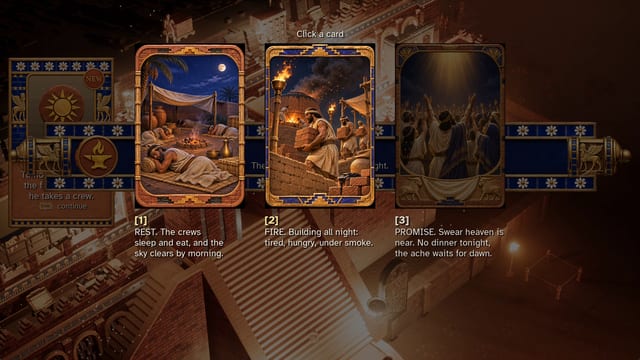
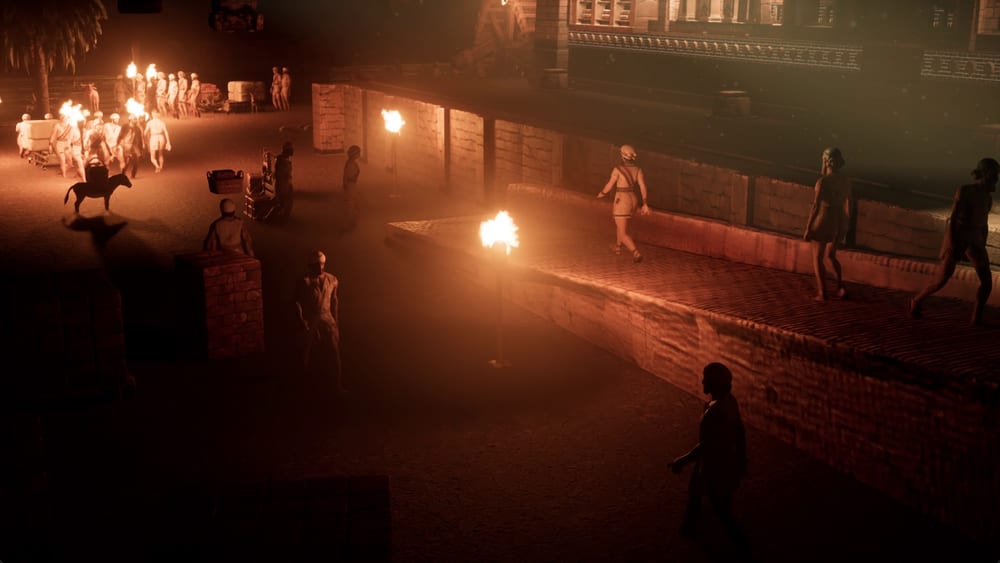
At 00:00 EST the project was created with hardware ray tracing, Lumen and DLSS 4.5 on. By that night the content pipeline worked end to end (concept image, image-to-3D, Blender, Mixamo, Unreal), our own level replaced the template, the first package ran at about 140 fps, and the loop closed: the night card holds the sun at dusk, FIRE works through the night and day four begins.
399 commits. The ziggurat kit with glazed bands, a triple stair and its gate; each stratum with its own identity; a building site with people on every face of the rising tier; a market with caravans; crews that walk home when they leave. And the unglamorous half: one shared ground rule so nobody floats, collision so nothing walks through walls, and sharp HUD text at any resolution.
An outside playtester called the demo "a beautiful canvas with no clarity of what to do." They were right. The last 36 hours went to clarity: everything became a click, a papyrus scroll lists three works per stratum, THE THREE CUTS shows the ending at every dusk, a how-to-play card opens at the first dawn, and the interface took the lapis and bronze of the Ishtar Gate. An autopilot played whole runs in the editor to check every ending could be reached.
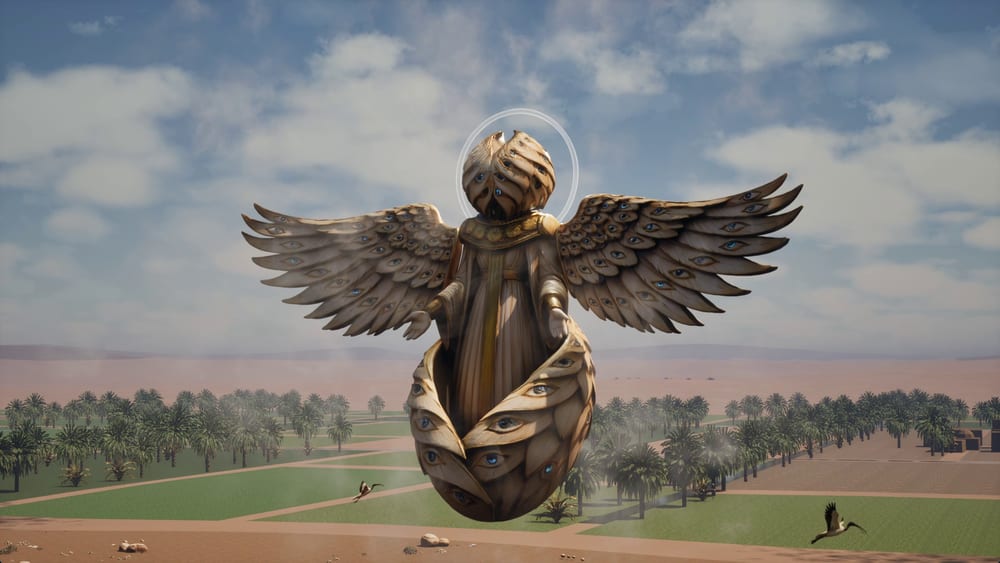
A seraph that descends in a column of light and watches the tower, chains with physics on the chained Architects, a richer terrain, a second pass of the cold open, and the final package before the freeze. Then the gameplay video, recorded and cut by the same agent from data (below), the itch.io page and the submission.
The domain decides and the presentation only shows: logic in small C++ models, every number in a CSV table, Blueprints and UMG only to display. Tuning the game never meant recompiling it.
Concept images (ChatGPT, fal) became models with Hyper3D Rodin, Tripo and Meshy, were cleaned in Blender by our own scripts and rigged on one shared Mixamo skeleton. Voices, sound and music came from ElevenLabs.
Through Unreal MCP the agent imported assets, ran Python in the editor, started Play In Editor, read the logs and took screenshots to check its own work. A package every day: a build that only works in the editor is worth zero.
Everything is logged: every generated asset with its tool, prompt and timestamp in an asset manifest, from which the credits are built. Anything that cost more than thirty minutes went into a lessons file, written by symptom so the next failure is found faster.
Lumen hardware ray tracing at full resolution for global illumination and reflections, MegaLights for the shadowed fires of the night, and NVIDIA DLSS 4.5 with Ray Reconstruction denoising it all. Press G in the game to switch between flat lighting and the ray-traced one.
For the video we wanted an honest comparison, not a filter: the same take was recorded twice from the game, once with ray tracing on and once with Lumen and MegaLights off, aligned frame by frame, and joined by a divider that sweeps across the picture.
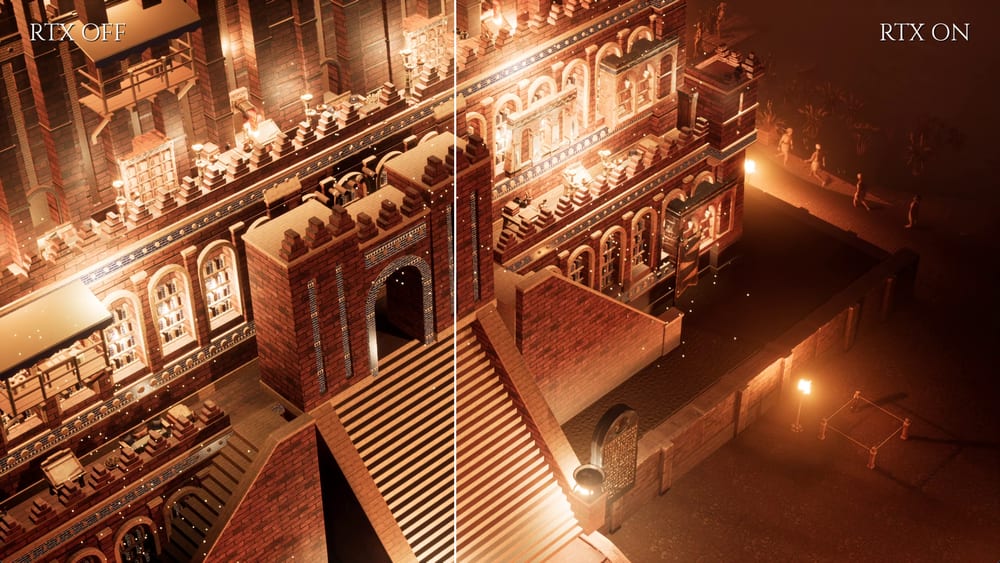
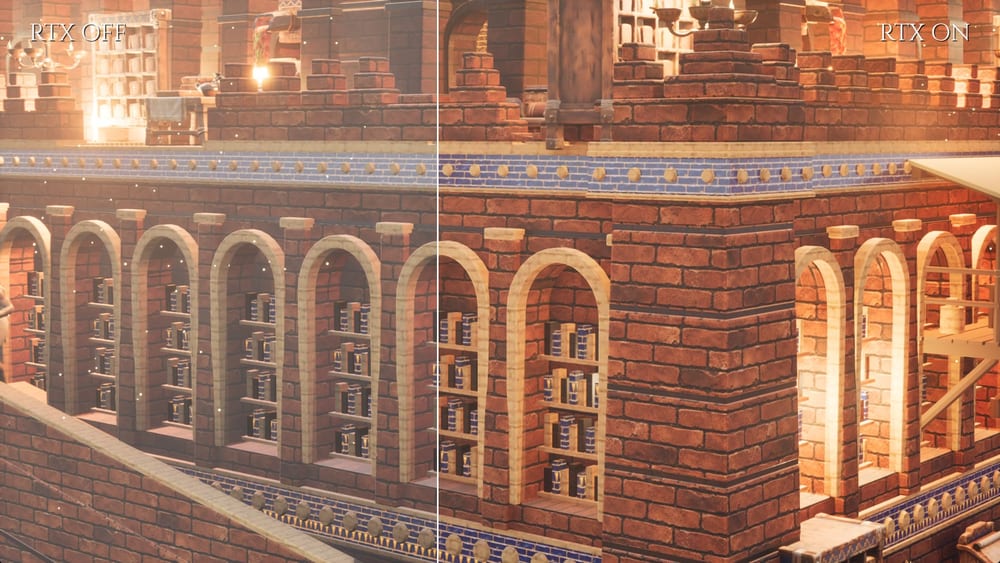
The gameplay video was not edited by hand in a timeline. Each take is a list of timed console commands in a CSV (load a day, set the sun, move the camera, cue an event); a recorder launches the packaged game, plays the take and captures the game window itself, so nothing on the desktop can get into the shot. The cut is another CSV: shot, in point, grade, caption, effect. One command renders the master with captions, title and music at -14 LUFS.
That made notes cheap. Five versions came out in one day: a new opener that tilts up the tower and orbits on the music's first hit, the voices removed after transcribing every take to find where they were, a seraph shot reframed so its wings fit, a night that shows the actual choice, and a soundtrack that no longer drops out.
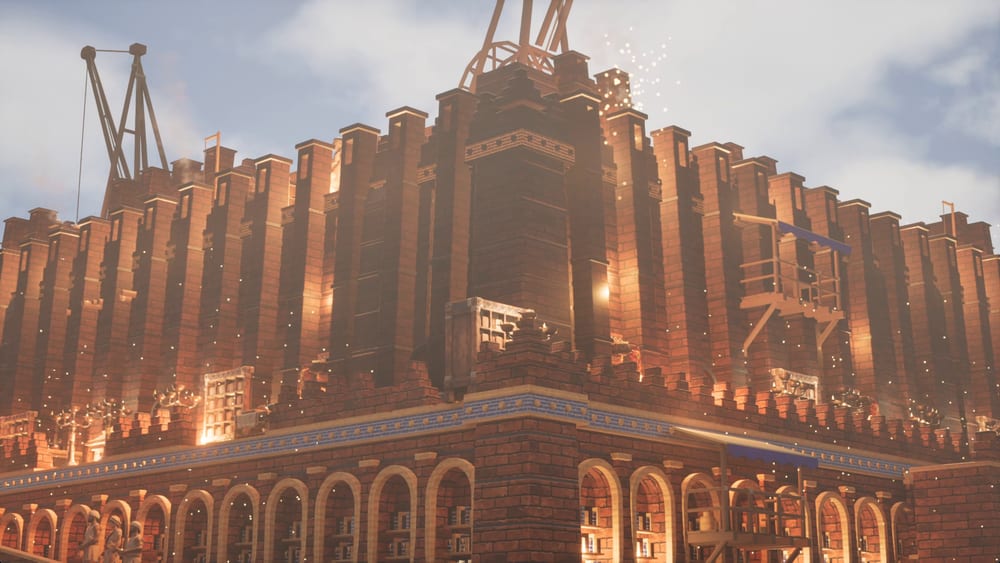
Gameplay video (0:59). Every shot is the game itself, captured from its own window. Sound on.
From day five no crew could be lit: smaller mirrors put their discs below the third terrace and the beam refused to climb. One geometry number, a whole late game broken.
Every waterfall looked like glass behind a fine mesh. The procedural mesh builder wrote its UVs through a stale attribute; the fix went into the Blender script that builds them.
The HUD drew every font at 10 pt and stretched the bitmap two or three times at 1080p. Rendering at the real size made every title and subtitle sharp.
Rigged in metres, the new character came back from Mixamo with a x100 root scale. The shared skeleton forgives many things; units are not one of them.
Every image on this page, and on the itch.io page, is a capture of the game running in Unreal Engine. No concept art, no promotional render.
This was an AI jam and the game says so: concept images were generated from text prompts (ChatGPT, fal) and turned into 3D (Hyper3D Rodin, Tripo, Meshy); voices, sound effects and music came from ElevenLabs; the gameplay video's music was made with Suno; Claude Code wrote the code and drove the editor. The design, the decisions, the art direction and the cut were mine. Third-party assets (Megascans surfaces via Fab, Mixamo animations, two OFL fonts) are listed with their licenses in the credits that ship with the game.
Made before the jam and declared: our tooling (generation, import and packaging scripts, the Claude Code and MCP setup), prompt libraries and text-only design documents. Every pre-jam script line was rewritten during the jam, and no pre-jam art is in the game.
Download it free on itch.io: unzip it into an empty folder and run ArchitectsCut.exe. A ray-tracing GPU is recommended; on NVIDIA RTX the graphics menu offers DLSS 4.5. Seven days, one beam, three endings.
